
Kindergarten
A Warm, Faith-Centred Beginning to Learning
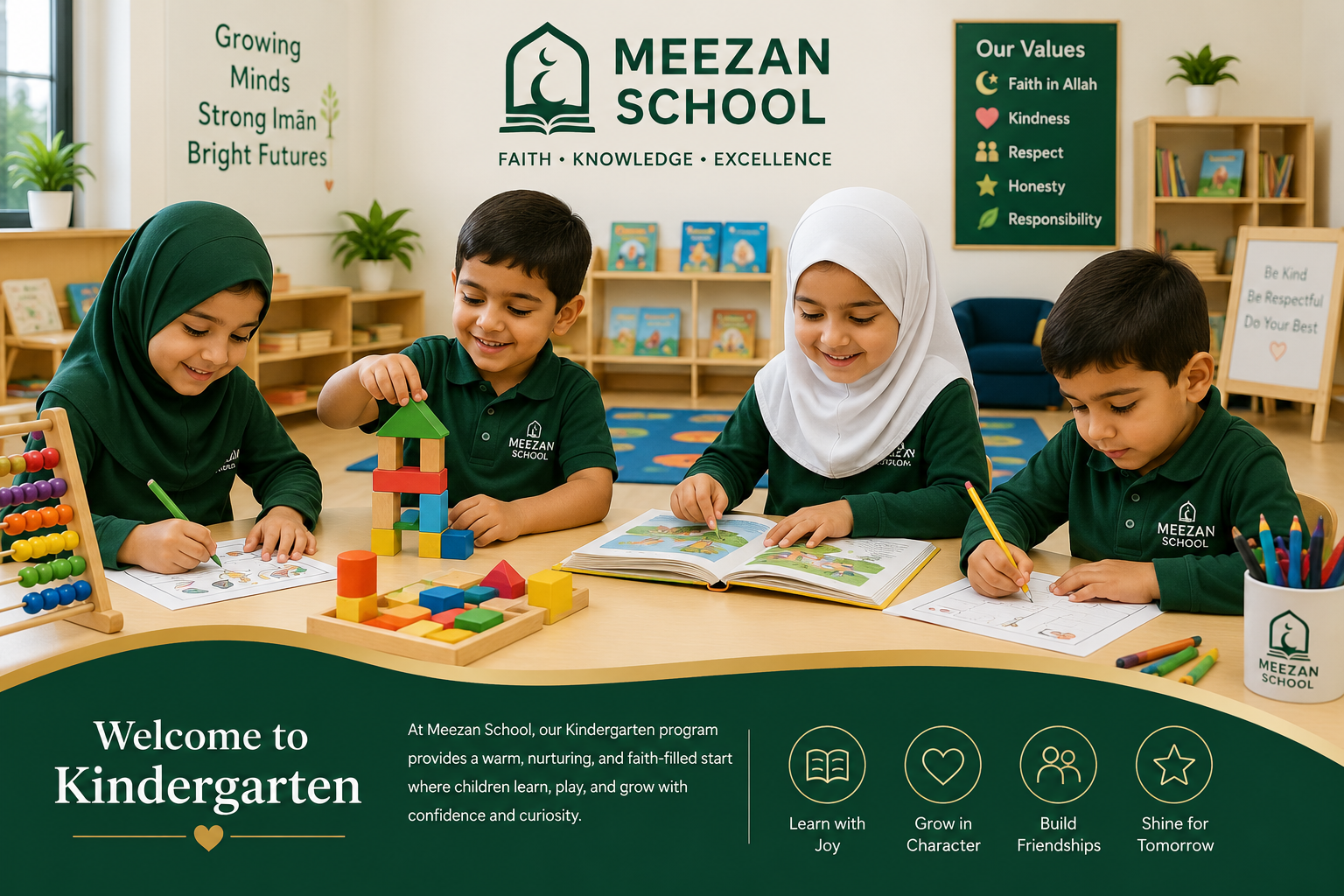
Meezan School’s Kindergarten program provides a caring and engaging environment where young children learn through play, exploration, guided instruction, Islamic values, friendship, creativity, and daily classroom routines.
Learning, Playing and Growing with Confidence
Kindergarten is an important stage in a child’s development. Our program helps children build confidence, communication, independence, curiosity, early academic skills, positive relationships, and a love of learning.
Children participate in purposeful play, small-group learning, teacher-guided activities, stories, discussion, art, movement, exploration, early literacy, numeracy, and Islamic learning.
Ontario Certified Teachers and Early Childhood Educators work together to create a structured, caring, and developmentally appropriate classroom environment.
What Children Develop in Our Program
The Kindergarten experience supports academic, social, emotional, physical, spiritual, and personal growth.
Early Literacy
Children develop listening, speaking, vocabulary, letter awareness, phonics, reading readiness, storytelling, drawing, and early writing.
Early Numeracy
Students explore counting, number relationships, patterns, shapes, measurement, sorting, comparison, and mathematical thinking.
Play and Inquiry
Purposeful play helps children investigate ideas, solve problems, imagine, create, collaborate, and communicate.
Independence
Children practise classroom routines, organizing belongings, following instructions, making choices, and completing simple tasks.
Friendship and Belonging
Students learn to share, take turns, communicate respectfully, solve small conflicts, and participate positively in a group.
Islamic Character
Kindness, honesty, respect, gratitude, patience, responsibility, and good manners are reinforced throughout the school day.
Kindergarten Learning Areas
Children learn through a combination of guided instruction, exploration, play, movement, conversation, and hands-on activities.
Reading Readiness
Stories, phonological awareness, letter-sound learning, comprehension, vocabulary, and print awareness.
Early Writing
Drawing, mark-making, letter formation, name writing, labels, simple sentences, and communicating ideas.
Mathematical Thinking
Counting, quantities, patterns, shapes, measurement, sorting, comparison, and everyday problem-solving.
Science and Discovery
Observation, questioning, nature, materials, living things, experiments, building, and exploration.
Creative Arts
Drawing, painting, crafts, design, imagination, storytelling, movement, and creative expression.
Health and Movement
Gross-motor skills, fine-motor development, active play, safety, healthy habits, and body awareness.
Social-Emotional Learning
Identifying feelings, building confidence, making friends, self-regulation, empathy, and problem-solving.
Islamic Learning
Short surahs, duas, Islamic manners, stories, prayer habits, gratitude, cleanliness, and love of Allah.
Structure, Variety and Purposeful Play
Daily routines may vary, but children experience a balanced mix of teacher-guided learning, independent exploration, movement, faith, and social interaction.
Arrival and Welcome
Greeting, organizing belongings, classroom routines, morning conversation, and preparing for the day.
Circle and Guided Learning
Stories, discussion, literacy, numeracy, Islamic learning, instructions, and group participation.
Learning Centres
Building, reading, writing, art, dramatic play, mathematics, science, puzzles, and fine-motor activities.
Movement and Active Play
Physical activity, outdoor play where available, coordination, teamwork, and healthy movement.
Prayer and Islamic Routines
Duas, Islamic manners, cleanliness, gratitude, short surahs, and age-appropriate prayer habits.
Creative Learning
Art, design, storytelling, crafts, imagination, music-free movement, and classroom projects.
Reflection and Review
Sharing learning, reviewing the day, tidying materials, and preparing for dismissal.
Family Communication
Important information may be shared through classroom communication or the school office.
Islamic Learning and Character
Kindergarten students are introduced to Islam in a warm, age-appropriate, and practical way that helps faith become part of everyday learning and behaviour.
- Short surahs and simple Qur’an recitation
- Daily duas and remembrance of Allah
- Islamic greetings and respectful manners
- Cleanliness and preparation for prayer
- Stories of the Prophets and Islamic role models
- Kindness, honesty, patience, sharing, and gratitude
- Respect for parents, teachers, classmates, and the community
Helping Young Children Become Confident Learners
Social Development
Children learn to participate in groups, make friends, take turns, share, communicate, and resolve minor conflicts respectfully.
Emotional Development
Students build confidence, identify feelings, practise patience, manage transitions, and seek help from trusted adults.
Physical Development
Active play, movement, drawing, cutting, building, writing, and hands-on activities strengthen gross- and fine-motor skills.
Language Development
Conversation, stories, questions, vocabulary, songs without instruments, rhymes, and presentations strengthen communication.
Thinking Skills
Children practise observing, sorting, predicting, comparing, questioning, creating, and solving age-appropriate problems.
Spiritual Development
Students begin developing love of Allah, gratitude, Islamic identity, worship habits, and awareness of good character.
Families Can Support Kindergarten Success By
- Maintaining regular attendance and punctuality
- Establishing consistent morning and bedtime routines
- Reading with the child regularly
- Practising independence with dressing and belongings
- Reinforcing respectful language and good manners
- Reviewing school communication and notices
- Communicating concerns with the teacher or office
- Supporting simple Qur’an, dua, and classroom practice
Working Together During the Early Years
Strong communication between families, teachers, Early Childhood Educators, and the school office helps children feel secure and supported.
Classroom Communication
Teachers may communicate about routines, learning, behaviour, participation, strengths, or areas where the child may need support.
Home Routines
Consistent sleep, attendance, reading, independence, respectful behaviour, and preparation for school help children succeed.
Questions and Concerns
Families may contact the classroom teacher or school office regarding learning, attendance, routines, pickup, forms, or student well-being.
Helpful Skills to Practise Before School
Children do not need to master every skill before entering Kindergarten. These simple routines can help them transition more confidently.
Personal Independence
Putting on shoes or a coat, carrying a backpack, opening lunch items, and managing personal belongings.
Listening and Following Directions
Listening to a short instruction, completing one or two steps, and asking for clarification.
Communication
Expressing needs, answering simple questions, speaking respectfully, and asking an adult for help.
Sharing and Turn-Taking
Waiting briefly, sharing materials, playing cooperatively, and respecting another child’s space.
Fine-Motor Practice
Drawing, colouring, using child-safe scissors, building, puzzles, and handling books carefully.
Early Literacy
Enjoying stories, recognizing the child’s name, talking about pictures, rhymes, and familiar letters.
Early Numeracy
Counting objects, sorting, recognizing simple patterns, comparing sizes, and noticing shapes.
Islamic Routines
Saying salam, simple duas, using respectful manners, practising cleanliness, and showing kindness.
Helpful Kindergarten Resources
Give Your Child a Caring and Faith-Centred Start
Apply for Kindergarten, request a school tour, review tuition, or contact the Meezan School office with questions about readiness, placement, routines, and the admissions process.